HVAC
Warm Homes Loan Scheme opens with ten lenders and MCS installer requirement
Government-backed zero- and low-interest loans of up to £35,000 are now available for heat pumps, solar, batteries and heat network connections, with most work restricted to MCS-certified installers, CIBSE has reported.
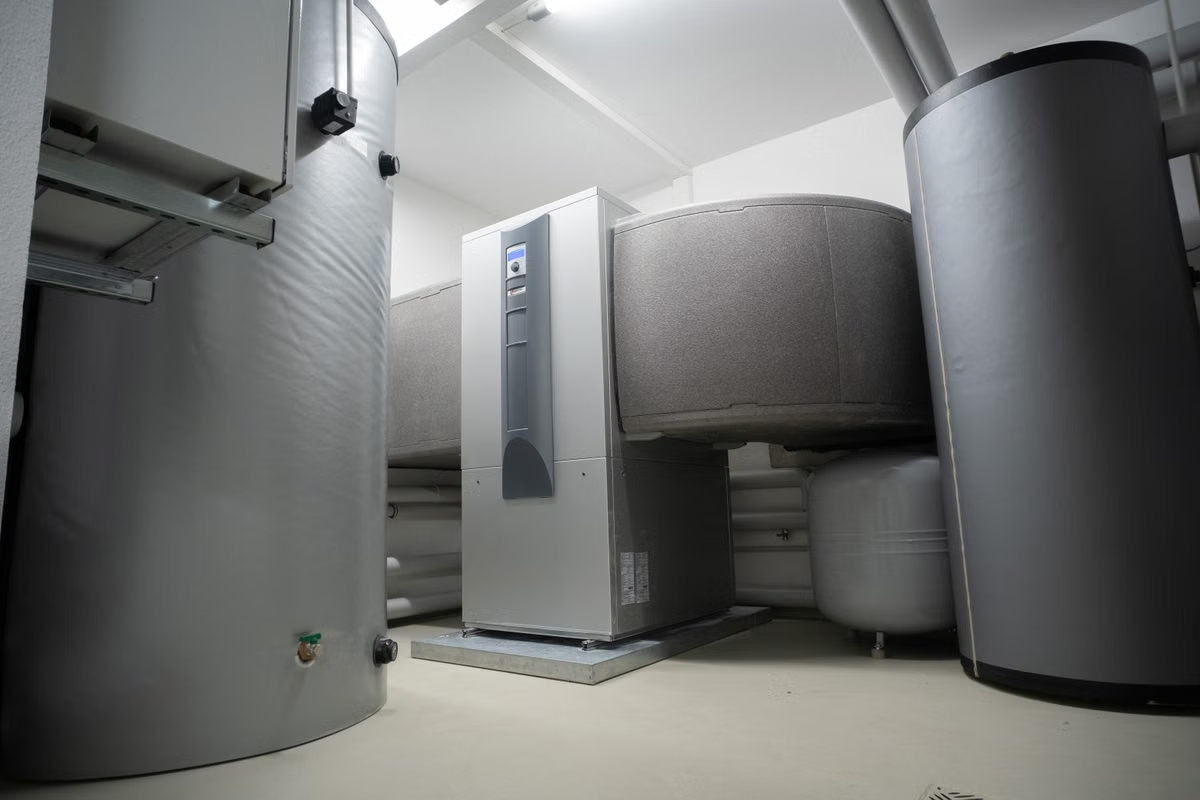
The UK Government has launched the Warm Homes Loan Scheme, offering homeowners across England, Scotland, Wales and Northern Ireland government-backed zero- and low-interest finance for heat pumps, solar panels, batteries and heat network connections, the Chartered Institution of Building Services Engineers (CIBSE) reported on 28 October.
HM Treasury said in a press release on 26 October 2026 that the scheme would launch that day. The Department for Energy Security and Net Zero (DESNZ) published a factsheet on the scheme the following day.
According to the DESNZ factsheet, the no- and low-interest loans will allow people to install clean energy technology without any upfront cost. The government said it had worked with lenders to achieve "an up-to-5 per cent reduction in interest rates from regular loans".
CIBSE said that for the building services sector, increased access to finance could support demand for heat pumps, renewable electricity generation, battery storage and integrated domestic energy systems. It added, however, that access to finance is only one part of successful home decarbonisation.
The installer requirement
Most eligible installations under the scheme must be carried out by installers certified by the Microgeneration Certification Scheme (MCS), CIBSE said, with an exception for heat network connections. The factsheet lists a loan cap for air-to-air heat pumps that applies only once MCS certification is available for that technology.
CIBSE said achieving the expected energy and carbon savings will depend on system design, installation, commissioning and operation, alongside building fabric, ventilation and occupant comfort. Actual savings will depend on the property, system design, energy use and finance costs, the institution said.
Dr Anastasia Mylona, CIBSE Technical Director, said in the institution's January 2026 response to the wider Warm Homes Plan: "These technologies can deliver real benefits but only when properly designed, installed and integrated".
CIBSE pointed members to its Domestic Heat Pump Design and Installation Guide, developed with the Heat Pump Association UK. Dr Jaydeep Bhadra, Domestic Sector Technical Manager at CIBSE, said of the guide: "This guide addresses a real need in the industry. Heat pumps demand a different approach to design, installation".
Loan caps by technology
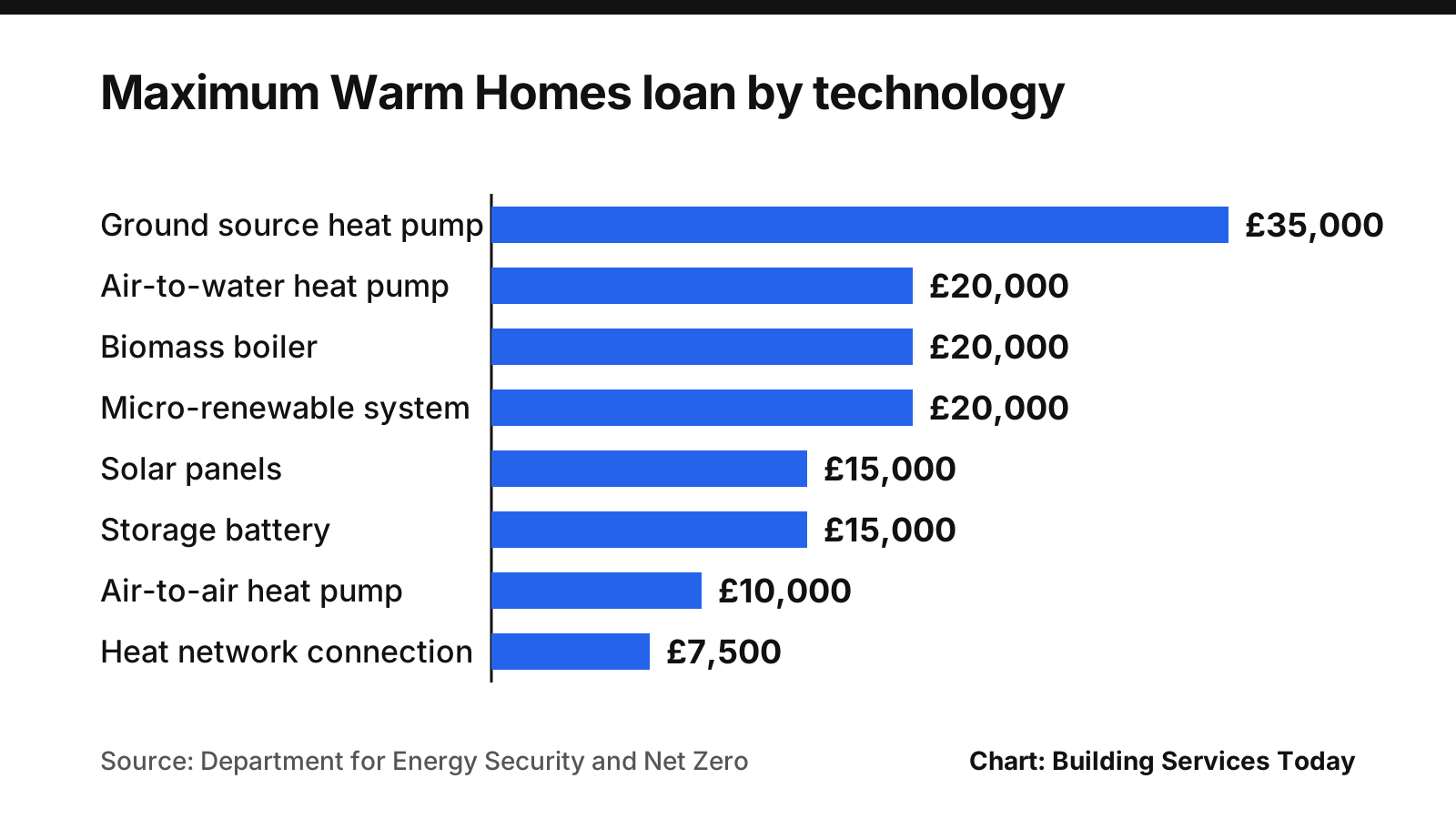
The DESNZ factsheet sets a maximum loan for each eligible technology.
| Technology | Maximum loan |
|---|---|
| Ground source heat pump | £35,000 |
| Air-to-water heat pump | £20,000 |
| Biomass boiler | £20,000 |
| Micro-renewable system | £20,000 |
| Solar panels | £15,000 |
| Electrical storage battery | £15,000 |
| Air-to-air heat pump (once MCS certification available) | £10,000 |
| Heat network connection | £7,500 |
The factsheet said homeowners can combine a loan with a grant through the Boiler Upgrade Scheme. Official GOV.UK guidance adds that a Warm Homes loan cannot be used alongside other government funding to pay for the same improvement.
The lenders
Ten lenders are initially offering loans, some interest free, according to the factsheet. Those named include Homeserve, which the factsheet describes as partnering with E.On, and South Manchester Credit Union. CIBSE said some products carry repayment terms of up to 30 years.
Lenders will carry out normal affordability, credit and eligibility checks on applicants, the factsheet said. The government described this as the first part of the scheme's offer, with further lenders and products expected to join as it develops.
The savings claims
The government gave the example of a homeowner borrowing £10,000 at 8% over seven years, who could expect to repay about £155 a month on a regular loan. Through the loan scheme, it said, that borrower could save up to £285 a year on repayments.
DESNZ estimated that installing a heat pump, battery and solar panels could save families up to £550 a year on energy bills, rising by a further £300 a year with a time-of-use tariff.
Background
The Warm Homes Plan paired an expansion of the Boiler Upgrade Scheme with a new zero and low-interest loan offer backed by an initial £2bn of government support, according to the DESNZ plan document. The plan commits £15bn of public investment to upgrade up to five million homes.
CIBSE welcomed the £15bn commitment in January 2026 but noted that retrofitting five million homes over five years represents only about a fifth of England's housing stock.
The government said further lenders and products are expected to join the scheme as it develops.
On the record: CIBSE, Department for Energy Security and Net Zero
Sources
- CIBSE (opens in a new tab) (accessed 2026-10-29)
- Department for Energy Security and Net Zero (GOV.UK) (opens in a new tab) (accessed 2026-10-29)
- HM Treasury (GOV.UK) (opens in a new tab) (accessed 2026-10-29)
- GOV.UK (opens in a new tab) (accessed 2026-10-29)
- Department for Energy Security and Net Zero (GOV.UK) (opens in a new tab) (accessed 2026-10-29)
- CIBSE (opens in a new tab) (accessed 2026-10-29)
- CIBSE (opens in a new tab) (accessed 2026-10-29)
This story was researched from the primary sources above and checked against them before publication. Spotted an error? Tell us and we will correct it promptly.