standards
Passivhaus Trust and CIBSE to write guidance on active cooling in low-energy buildings
The two bodies are jointly developing technical guidance on when and how to use low-energy active cooling in Passivhaus and other low-energy buildings as UK heatwaves grow longer and more intense.
The Passivhaus Trust and the Chartered Institution of Building Services Engineers (CIBSE) are jointly developing technical guidance on active cooling in low-energy and Passivhaus buildings, CIBSE announced on 17 November.
The bodies said Passivhaus design puts passive overheating measures first, including solar shading, control of glazing and internal gains, and effective ventilation. But as heatwaves become longer and more intense, they said, some buildings, such as dense urban housing or spaces with high internal gains, may also benefit from low-energy active cooling.
The publication is intended to help designers judge when active cooling is appropriate, how to minimise cooling demand, and how to select, model, design and operate systems. It will cover the relationship between passive design and active cooling, cooling demand assessment, system options, controls and commissioning, retrofit, and lessons from built projects.
A joint working group, which includes the International Passive House Institute, will steer the work. CIBSE said further details on the publication and opportunities to contribute would be released as the work progresses.
Case studies sought
The two bodies are inviting case studies of low-energy projects that already incorporate active cooling, submitted through an online form, to inform the guidance.
CIBSE's announcement gave no publication date. A Passivhaus Trust Perspectives article published on 21 September 2026 said the joint active cooling research was due to be published the following year.
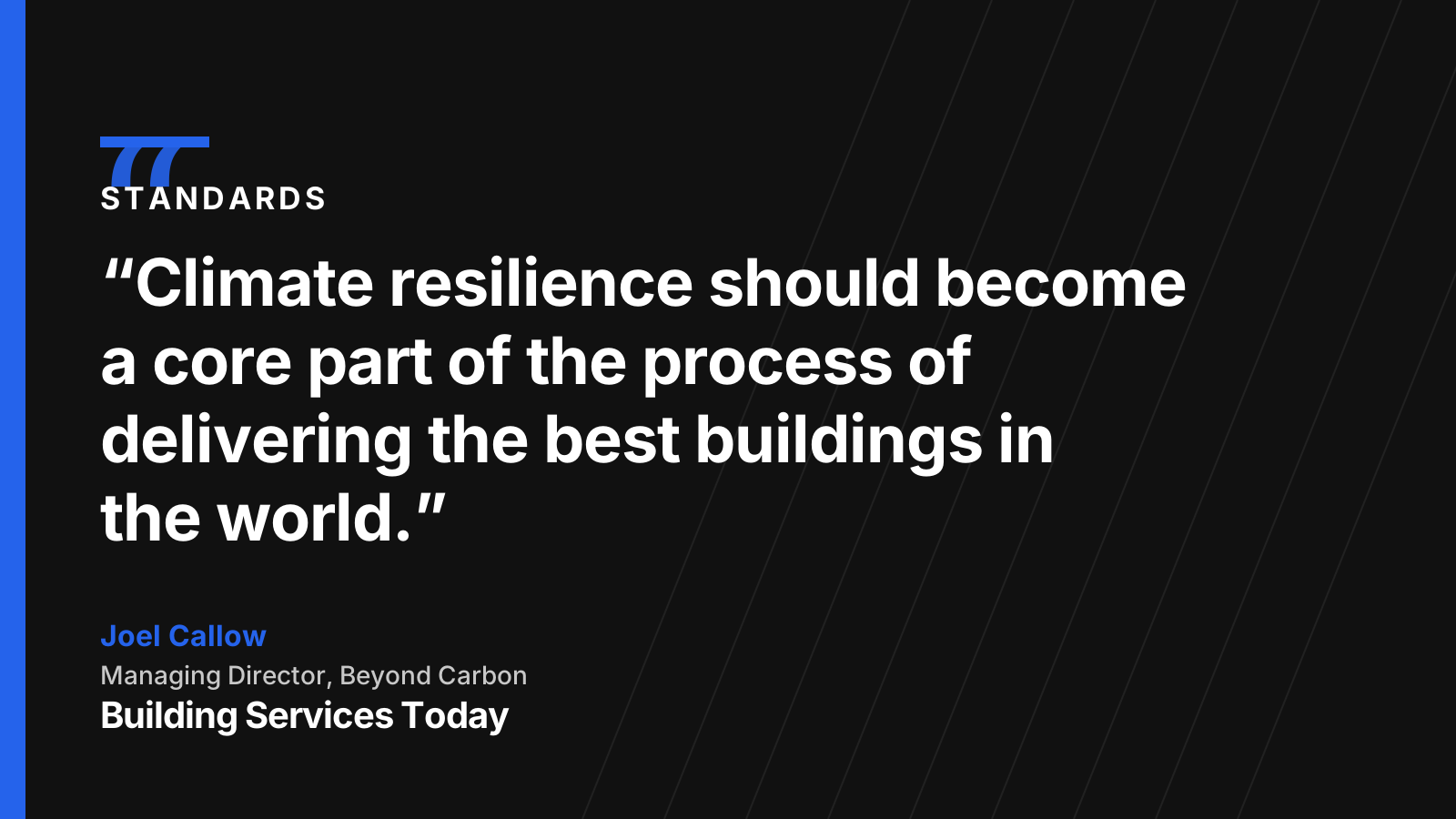
Writing in that series, Joel Callow, Managing Director of Beyond Carbon, said: "Climate resilience should become a core part of the process of delivering the best buildings in the world."
Supporting work
The guidance builds on four earlier Trust publications: Designing for Summer Comfort in the UK (2016), Avoiding Summer Overheating (2021), Overheating, Part O and PHPP (2023) and the Summer Comfort Statement (2024).
It will sit alongside a forthcoming update to the Trust's Dynamic Thermal Modelling guidance, produced with the UK Certifiers' Circle, which will consider evolving weather data and the need to assess resilience to future climates.
The Trust is also exploring how the Passivhaus Planning Package (PHPP) can better support the design and assessment of peak cooling loads, so designers understand the capacity needed during extreme heat as well as annual cooling demand. In August 2025 the Trust noted that the climate data used in PHPP modelling is historic.
On CIBSE's side, the institution said it is advancing future weather files and climate stress testing to help designers assess overheating risk, cooling requirements and resilience under current and future climates. It is also progressing sustainable cooling research through a dedicated working group, with upcoming guidance covering domestic and non-domestic buildings.
Background
The Trust has been signalling a shift towards active cooling for more than a year. In August 2025 it said active cooling had long been part of Passivhaus design in warmer climates, that it expected to see more active cooling solutions to address summer heatwaves in the UK, and that it was exploring how tried and tested Passivhaus active cooling measures could be deployed here.
On 10 September 2025 the Trust ran an online webinar, Summer Comfort in a Warming World, examining the emerging role of active cooling in UK Passivhaus projects and gathering feedback from project teams on overheating and comfort challenges. Julie Godefroy, Head of Net Zero Policy at CIBSE, was a panellist.
CIBSE's Overheating Position Statement, approved by its Technology Committee in March 2020, said that if overheating risk in buildings is not urgently addressed by policymakers and industry, the institution anticipates a significant increase in the use of mechanical cooling systems such as air conditioning and fans. It recommends using future weather files (TM48 and TM49) when assessing overheating, and CIBSE has adopted the adaptive thermal model to define thermal comfort and overheating criteria in TM52. Its TM59 sets out a design methodology for assessing overheating risk in homes.
At its May 2025 conference, CIBSE Research Manager Zoe De Grussa presented newly updated TM59 guidance and weather data files, and the institution said it was launching a new cooling group that year to drive research, guidance and collaboration.
The Trust's September 2026 article noted that Part O, the first UK regulation to govern overheating, only arrived in 2022. Trust guidance from 2023 directs complex UK Passivhaus projects to CIBSE TM59 or TM52 to supplement overheating assessment.
The Passivhaus Trust describes itself as an independent non-profit organisation providing leadership in the UK on the Passivhaus standard, and is the official UK affiliate of the International Passive House Association.
On the record: CIBSE, Passivhaus Trust
Sources
- CIBSE (opens in a new tab) (accessed 2026-11-17)
- Passivhaus Trust (opens in a new tab) (accessed 2026-11-17)
- Passivhaus Trust (opens in a new tab) (accessed 2026-11-17)
- Passivhaus Trust (opens in a new tab) (accessed 2026-11-17)
- Passivhaus Trust (opens in a new tab) (accessed 2026-11-17)
- CIBSE (opens in a new tab) (accessed 2026-11-17)
- CIBSE (opens in a new tab) (accessed 2026-11-17)
This story was researched from the primary sources above and checked against them before publication. Spotted an error? Tell us and we will correct it promptly.