standards
CIBSE says Budget 2026 lowers bills but the demand side has fared less well
The institution's domestic sector technical manager says the Budget's bill measures are welcome but the demand side has fared less well, with Boiler Upgrade Scheme funding held at £400m and zero-rate VAT on energy-saving materials ending in March 2027.
The Chartered Institution of Building Services Engineers (CIBSE) has said the immediate measures in Budget 2026 reduce what households pay for energy but none of them reduces the amount of energy a home needs, in an analysis published on 15 November.
Dr Jaydeep Bhadra, CIBSE's domestic sector technical manager, asked whether the Budget would make homes cheaper to run or only lower bills for a while. He said the immediate measures were transfers that reduced bills, and that households needed the relief, but that none of them reduced a home's energy demand.
"But cheaper electricity is only half the equation," Dr Bhadra said. "The other half is homes that need less energy and use it well."
CIBSE described that second half as an engineering task, closed by design, installation and commissioning, and said this was where building services engineering mattered most.
The bill measures
According to the HM Treasury Budget document, households in England in council tax bands A to D will receive a £100 payment from January 2027, and the VAT cut on electricity is extended to July 2027, which the government expects to take about £50 off the annual Ofgem price cap.
The Budget also commits to reform electricity standing charges, with details to be announced next year, and introduces an Energy Debt Circuit Breaker that the government says will save all billpayers about £30 by 2030. The Treasury document says no new policy costs will be added to bills until a Cost Control Framework is in place at the 2027 spending review, and notes that gas set the wholesale electricity price about 60% of the time in 2025.
The demand side
CIBSE said the demand side had fared less well. Boiler Upgrade Scheme grant levels are unchanged, but funding is held at £400m in 2027-28, which the institution said was below the previous trajectory of £709m by 2029-30. CIBSE also said £1bn had been cut from Warm Homes Plan capital grants, although most funding for low-income households and social housing was protected.
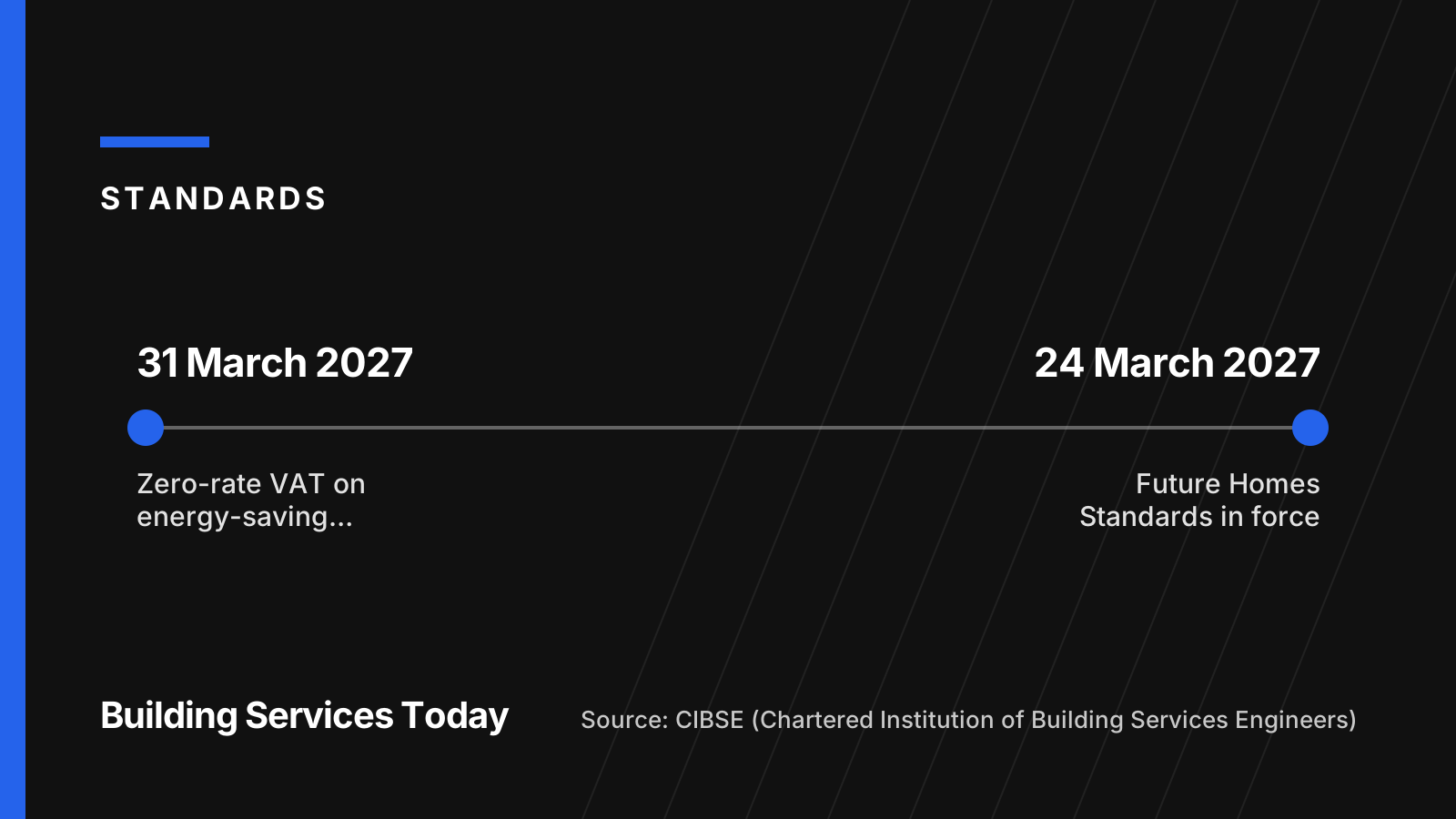
The Budget did not extend zero-rate VAT on energy-saving materials, which CIBSE said ends on 31 March 2027.
CIBSE's earlier Budget analysis, written by Sam Baptist, its director of policy and external affairs, and published on 29 October, said the reduced Boiler Upgrade Scheme trajectory seriously jeopardised the government's own heat pump installation targets. Baptist said at the time he was quietly optimistic that uptake would continue to increase.
CIBSE singled out the new Warm Homes Loan Scheme as a genuine positive. The Department for Energy Security and Net Zero's factsheet, published on 27 October, says the no- and low-interest loans allow people to install clean energy technology without upfront cost, that homeowners can combine a loan with a grant of up to £9,000, and that ten lenders are initially offering loans, some interest free. The factsheet says a heat pump, battery and solar panels could save families up to £550 a year, rising by a further £300 a year with a time-of-use tariff. CIBSE said those savings depended on installations happening at scale and on systems performing as designed.
Gas disconnection
CIBSE said the government's move to abolish gas standing charges would make a low-use gas connection almost free to keep, so households that install heat pumps would have less reason to leave the gas network without changes to the disconnection process. The institution said households needed to be able to act on a price signal for it to reduce their costs.
Ofgem is separately reviewing the regulatory arrangements governing gas disconnection for domestic and small business consumers. The regulator said it was examining the framework ahead of an expected increase in heat pump uptake.
Building regulations
CIBSE's earlier analysis said the government would make no major changes to building regulations for the remainder of this Parliament, to 2029, but that it expected planned changes, including the Future Homes Standard and the review of Part O, to continue. In the new piece CIBSE said the Future Homes Standards come into force from 24 March 2027 and that delivering them well, so that homes perform as intended, should be the priority.
What CIBSE wants
The institution set out four calls. The first is to put building performance at the heart of plans to cut energy costs, with its members ready to help deliver it. The second is a steady pipeline of work, with CIBSE saying predictable support for heat pumps and home upgrades allows businesses to invest in skilled people rather than respond to stop-start demand.
The third is that when a home moves to a heat pump, leaving the gas network should be straightforward and affordable. The fourth is that where public money supports an upgrade, it should be designed, installed and commissioned to recognised guidance by competent professionals.
CIBSE said it was working to raise competence across the supply chain through its domestic technical guidance, training and professional registration, and its Domestic Building Services Panel, which it describes as an association of associations representing more than 12 member organisations.
Zero-rate VAT on energy-saving materials ends on 31 March 2027, a week after the Future Homes Standards take effect on 24 March.
On the record: CIBSE, Department for Energy Security and Net Zero
Sources
- CIBSE (opens in a new tab) (accessed 2026-11-16)
- CIBSE (opens in a new tab) (accessed 2026-11-16)
- HM Treasury (GOV.UK) (opens in a new tab) (accessed 2026-11-16)
- Department for Energy Security and Net Zero (GOV.UK) (opens in a new tab) (accessed 2026-11-16)
- CIBSE (opens in a new tab) (accessed 2026-11-16)
- Ofgem (opens in a new tab) (accessed 2026-11-16)
This story was researched from the primary sources above and checked against them before publication. Spotted an error? Tell us and we will correct it promptly.