standards
HETAS and Woodsure call for legal firewood moisture standard in Northern Ireland
The solid fuel certification body and its fuel subsidiary have told DAERA its draft Clean Air Strategy to 2032 should adopt an existing moisture standard rather than wait for a 2027 call for evidence on wet wood.
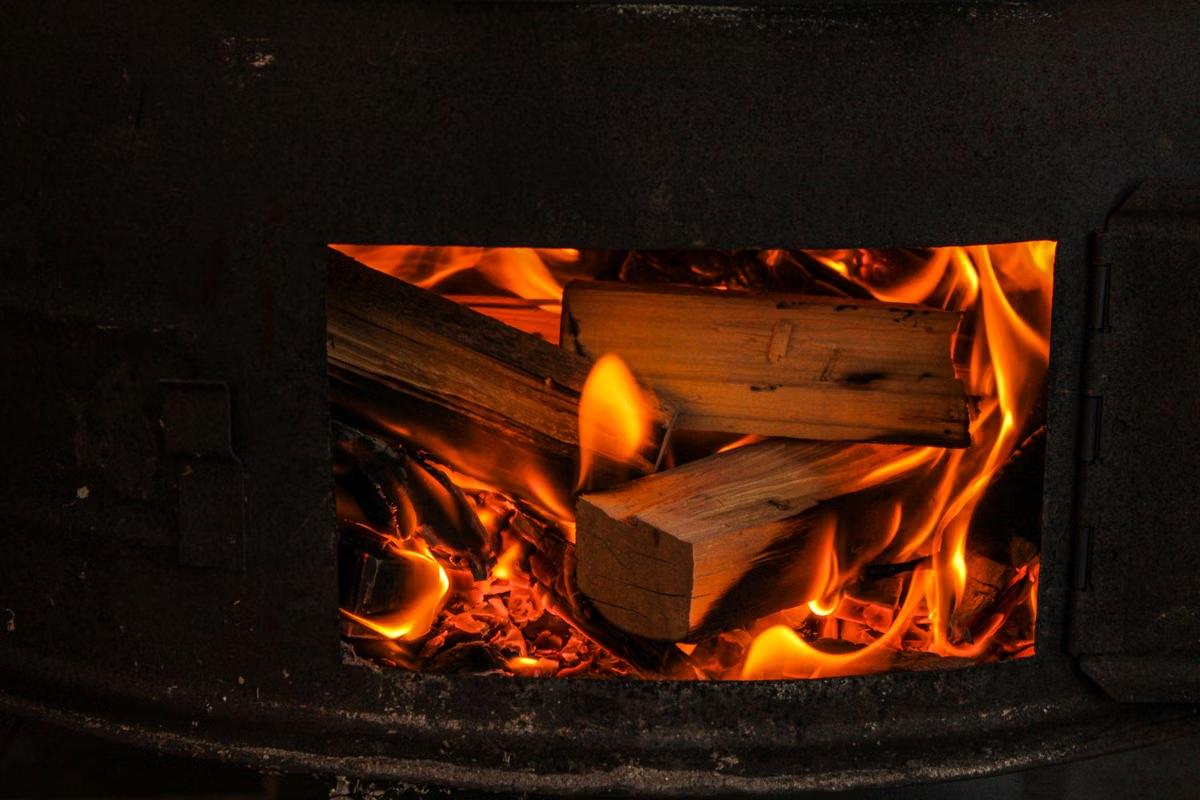
HETAS and Woodsure have called for a legal moisture standard for firewood sold in Northern Ireland in their joint response to the Department of Agriculture, Environment and Rural Affairs' consultation on its draft Clean Air Strategy to 2032, which closed on 27 October 2026.
HETAS, the Heating Equipment Testing and Approval Scheme, said the response also asks DAERA for a definition of "unseasoned wood" by moisture content and for a named and funded body to enforce any standard. Both organisations are part of Cleaner Safer Group.
Barry Cope, CEO of HETAS, said: "Northern Ireland has the chance to build its Clean Air Strategy on what already works: dry wood, trained professionals, and advice people can act on."
The draft strategy
DAERA Minister Andrew Muir launched the consultation on 1 September 2026 and it ran for eight weeks. DAERA said the draft sets out an ambition to improve air quality by 2032 through five strategic objectives, including updating legislation with more ambitious particulate limits and preventing pollution at source.
The department said the strategy's actions include upgraded monitoring, annual awareness campaigns, transport planning and tighter fuel and appliance standards. HETAS said the document runs to 2032 with a review in 2029 and, in its view, replaces the UK-wide 2007 strategy as Northern Ireland's first of its own.
Mr Muir said: "Cleaner air must be a public health priority, and we cannot ignore the risks, particularly to children and older people."
According to HETAS, the draft does not propose banning wood burners or taxing stoves or fuel. Its solid fuel proposals centre on restricting or phasing out coal, manufactured solid fuels and unseasoned wood for home heating, with DAERA planning to seek views on that by the end of 2027.
The case for adopting Ready to Burn
HETAS pointed to DAERA's 2022 summary of consultation responses, in which 82% of respondents backed banning retail sales of unseasoned wood, and said the new draft offers only a call for evidence four years later.
Rather than wait, the response proposes adopting an existing fuel quality standard. England has had a moisture standard for firewood sold in loads under 2m³ since 2021 through Ready to Burn, which Woodsure administers for the Department for Environment, Food and Rural Affairs (Defra). HETAS said Northern Ireland, Wales and Scotland have not adopted it.
Woodsure said it is open to helping DAERA adapt the Ready to Burn model, drawing on five years administering the scheme for Defra. DAERA already advises burning wood at 20% moisture or less, HETAS noted.
The response also questioned why peat and turf are left out of Action 4.1 when the Department for the Economy's Energy Strategy names peat among fuels contributing to poor air quality.
Monitoring and the B[a]P target
HETAS said DAERA's own figures show all 10 PM2.5 monitoring sites and all 13 PM10 sites already meet the proposed new limits, but benzo[a]pyrene, which DAERA attributes mainly to domestic coal and wood burning, remains above its objective. Three of the four B[a]P monitoring sites missed the objective in 2024.
The body asked DAERA for a date for meeting the B[a]P objective, which it said has been due since 2010. It also flagged a timing issue: monitoring network upgrades are due by December 2032, so the new limits due in 2028 and the 2029 review would rely on data gathered before the upgrades.
HETAS cited DAERA's report showing an Ecodesign wood burner emits about a ninth of the PM2.5 of an open fire per unit of energy, and said appliance upgrade schemes, practical advice and industry-led consumer education could deliver the next gains.
Heating mix and rural homes
HETAS said that in 2025/26, 46% of Northern Ireland households had more than one heating method, and 81% of those used an open fire or stove as the second. Wood logs were the most common fuel in those homes, ahead of house coal and smokeless coal.
The response said DAERA's rural needs assessment acknowledges some off-grid rural households may burn wet wood from their own land if affordable alternatives are not accessible. HETAS said households relying on solid fuel need an affordable alternative before being asked to change, and that the aim should be to phase out wet wood rather than all wood burning.
It also suggested an annual winter campaign on getting the most heat from the least smoke, delivered through the professionals stove users already trust.
Link to Defra's consultation
HETAS asked for clarity on what will cover homes outside smoke control areas, where Defra's proposed 1g/h smoke limit for new stoves would not apply in Northern Ireland. Defra's consultation, "Reduce smoke emissions from solid fuel burning", ran from 22 January to 19 March 2026 and sought views on stove emission limits, labelling of stoves and fuels, and higher penalties, including raising fines for fuel suppliers from £300 to £2,000.
HETAS supports the 1g/h limit, which would apply only to new appliances placed on the market. It said Defra's proposed A-C style point-of-sale stove label would be enforced by Trading Standards in Great Britain but voluntary in Northern Ireland, and called for joined-up work with Defra and the other administrations on labelling.
Under Action 2.3 of the draft, DAERA, the Department of Health and the Department for the Economy will analyse Northern Ireland's responses to Defra's consultation. Defra says it is still analysing feedback and has not published its response.
DAERA will now consider the consultation responses and publish a final strategy, with a mid-point review scheduled for 2029.
Sources
- HETAS (opens in a new tab) (accessed 2026-10-28)
- Department of Agriculture, Environment and Rural Affairs (DAERA) (opens in a new tab) (accessed 2026-10-28)
- Department of Agriculture, Environment and Rural Affairs (DAERA) (opens in a new tab) (accessed 2026-10-28)
- Defra / GOV.UK (opens in a new tab) (accessed 2026-10-28)
- HETAS (opens in a new tab) (accessed 2026-10-28)
- HETAS (opens in a new tab) (accessed 2026-10-28)
- HETAS (opens in a new tab) (accessed 2026-10-28)
- HETAS (opens in a new tab) (accessed 2026-10-28)
This story was researched from the primary sources above and checked against them before publication. Spotted an error? Tell us and we will correct it promptly.